
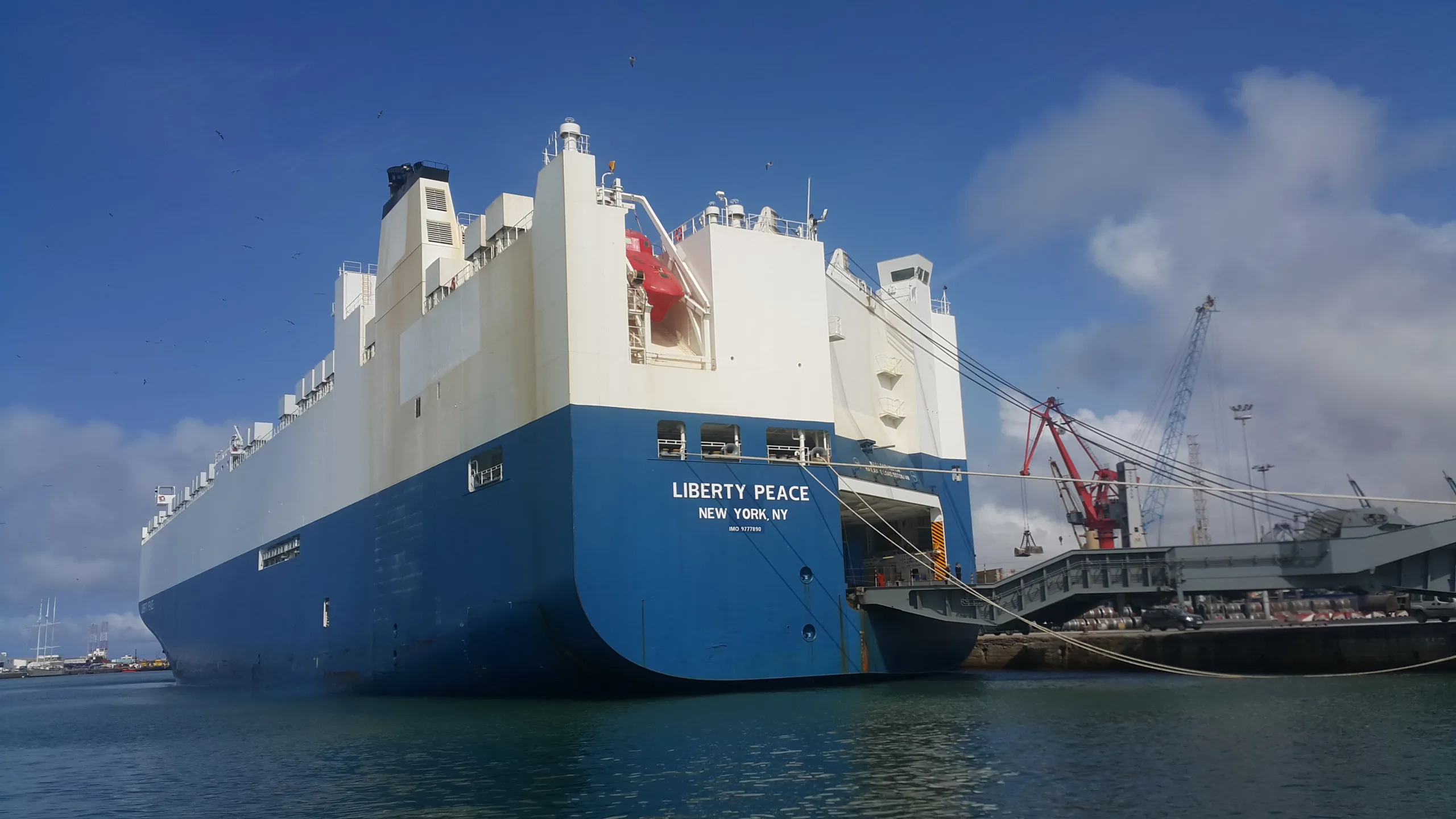
Record-Breaking Vehicle Rush: Eight Car Carriers Race to Mombasa Before 2018 Model Deadline
The Port of Mombasa is bracing for an unprecedented surge in vehicle imports as eight car carrier vessels are scheduled to arrive within the next 10 days, bringing more than 4,700 units before the year-end deadline. This extraordinary volume represents what Kenya typically imports in an entire month, highlighting the intense pressure on dealers and importers to beat the country’s strict eight-year age limit rule.
📰 Related: Earlier this year, we covered the Final RoRo Sailing Deadline for 2018 Vehicles, when the Liberty Ace vessel closed bookings on October 17, 2025.
📊 The Numbers Behind the Rush

The scale of this year-end surge is remarkable when compared to typical import patterns:
| Import Period | Number of Vehicles | Timeframe |
|---|---|---|
| Typical Monthly Minimum | 4,000 units | 30 days |
| Monthly Average (Jan-Nov) | 5,500 units | 30 days |
| Peak Months | 9,000 units | 30 days |
| December 2025 Rush | 4,700+ units | 10 days |
This concentration of imports means the Port of Mombasa will process in just 10 days what would normally take nearly three weeks during average periods—a logistical feat requiring precise coordination across shipping lines, port authorities, and customs officials.
🚢 Vessel Arrival Schedule: A Race Against Time

According to Kenya Ports Authority vessel berthing schedules, the arrivals are staggered across the final days of December:
| Date | Number of Vessels | Status |
|---|---|---|
| Saturday, Dec 21 | 2 vessels | First wave arrives |
| Wednesday, Dec 25 | 2 vessels | Christmas Day arrivals |
| Dec 26-29 | 4 vessels | Final wave (one per day) |
| Dec 30-31 | Possible additional arrivals | TBC |
During this period, the port will handle a total of 53 vessels, including 29 container ships, 15 conventional cargo vessels, eight car carriers, and one oil tanker—making it one of the busiest fortnights in the port’s calendar. Business Today Kenya
⚖️ Understanding Kenya’s Eight-Year Import Rule
Kenya’s regulations cap the age limit for used car imports at eight years from the date of first registration. This policy, governed by Kenya Standard KS 1515:2000, is designed to ensure road safety and environmental standards while balancing the country’s need for affordable vehicles.
What This Means for 2018 Vehicles:
Certificates of Roadworthiness issued for vehicles first registered in 2018 will become invalid after December 31, 2025. Any 2018 or earlier model arriving after this date will be rejected at the importer’s expense.
“All vehicles issued with such certificates must arrive at the port of destination or entry by December 31. Any vehicle registered in 2018 or earlier, arriving after December 31, 2025, will be deemed not compliant with KS 1515:2000 and shall be rejected at the importer’s expense.”
— Esther Ngari, Managing Director, Kenya Bureau of Standards (Kebs)
Starting January 1, 2026, only vehicles whose year of first registration is from January 1, 2019 onwards will be permitted entry into the country.
Who Does This Apply To?
The eight-year rule applies universally across all categories:
- ✅ Commercial importers and dealers
- ✅ Individual buyers
- ✅ Returning residents
- ✅ Diplomatic staff
Additional Requirements:
- Only right-hand drive motor vehicles are permitted
- All imports must have a valid Certificate of Roadworthiness from a Kebs-contracted inspection agency
- Vehicles must pass pre-shipment inspection
For those looking to import cars to Kenya from the UK, understanding these age restrictions and compliance requirements is absolutely crucial for successful importation.
💰 Calculating Your Import Costs
One of the most critical aspects of importing vehicles to Kenya is understanding the total landed cost, which includes:
- Customs Duty (typically 25% of CIF value)
- Excise Duty (varies by engine capacity)
- Value Added Tax (VAT) (16%)
- Import Declaration Fee (IDF) (2.5% to 3.5%)
- Railway Development Levy (RDL) (2%)
- Inspection fees and port charges
To accurately estimate these costs before committing to a purchase, use our comprehensive KRA Motor Vehicle Import Duty Calculator. This tool helps you understand the full financial picture and avoid unexpected expenses upon arrival at Mombasa.
Example Cost Breakdown for a Typical Used Import:
| Item | Percentage/Amount |
|---|---|
| Vehicle CIF Value | £5,000 |
| Customs Duty (25%) | £1,250 |
| Excise Duty (varies) | £500 |
| VAT (16%) | £960 |
| IDF (3%) | £180 |
| RDL (2%) | £120 |
| Total Duties & Taxes | ~£3,010 |
| Total Landed Cost | ~£8,010 |
Note: This is a simplified example. Actual costs vary based on vehicle specifications, engine capacity, and current exchange rates.
🌍 Import Source Countries: Japan Dominates
Kenya’s used vehicle imports come from several key global markets, with Japan maintaining overwhelming dominance:
| Country | Market Share | Key Vehicle Types |
|---|---|---|
| 🇯🇵 Japan | ~80% | Sedans, SUVs, commercial vehicles |
| 🇦🇪 UAE | ~8% | Luxury vehicles, SUVs |
| 🇬🇧 United Kingdom | ~5% | European brands, luxury sedans |
| 🇹🇭 Thailand | ~3% | Pickup trucks, commercial vehicles |
| 🇸🇬 Singapore | ~2% | Various models |
| 🇿🇦 South Africa | ~2% | Regional models |
Quality Inspection Services Inc. Japan (QISJ) serves as the appointed inspection firm responsible for issuing Certificates of Roadworthiness—a critical document that must accompany every vehicle shipment.
For UK-based dealers and exporters, the approximately 5% market share represents significant opportunity, particularly for European vehicle brands that aren’t as readily available from Asian markets. Learn more about the UK to Kenya import process.
📈 Market Trends: Steady Growth Despite Challenges
The Kenyan used vehicle market has demonstrated remarkable resilience and consistent growth:
Annual Import Volumes:
| Year | Units Imported | Growth Rate |
|---|---|---|
| 2023 | 70,275 | — |
| 2024 | 72,482 | +3.1% |
According to the Economic Survey 2025, Kenya imported 72,482 vehicles in 2024, up from 70,275 units in 2023—demonstrating steady growth despite global shipping disruptions. MSN Africa
Market Value:
Used vehicles continue to dominate Kenya’s motor vehicle market, with buyers in the second-hand segment spending an estimated Sh60 billion annually (approximately £370 million). This robust spending underscores the critical role that affordable imported vehicles play in Kenya’s transportation infrastructure and economy.
🚨 Lessons from Past Deadline Lockouts
The industry has learned hard lessons from previous deadline failures:
2014: The Major Lockout
The last significant losses due to the age limit rule occurred in 2014, when more than 2,000 used motor vehicles registered in 2006 were locked out of the country. Importers who miscalculated shipping times or underestimated the December rush faced:
- Vehicle rejection at port of entry
- Storage and demurrage fees
- Re-export costs or disposal
- Total financial losses on affected units
2020-2021: Pandemic Disruptions
During the COVID-19 pandemic, vehicles already in Kenyan waters were granted special allowances, but the situation highlighted the vulnerability of just-in-time shipping strategies.
In 2021, approximately 20,000 vehicles were reportedly held at the Port of Mombasa for months amid disagreements over age limit computations and COVID-era shipping delays, causing importers to face:
- Extended port detention
- Compliance disputes between agencies
- Mounting storage costs
- Uncertainty over final clearance
These experiences drove importers to adopt more conservative timelines and early ordering strategies.
🌊 Overcoming Global Shipping Challenges
Last year’s imports were particularly challenging due to Houthi Rebel attacks in the Red Sea, which forced shipping lines to reroute around the Cape of Good Hope in South Africa. This dramatically affected global shipping:
Transit Time Impact:
| Route | Average Transit Time | Impact |
|---|---|---|
| Normal Route (via Suez Canal) | 24 days | Pre-2024 standard |
| Rerouted (via Cape of Good Hope) | 40+ days | 2024-2025 reality |
| Some vessels with multiple port calls | 50+ days | Worst cases |
Despite these 66% longer transit times, importers managed to land their vehicles before the cutoff date, demonstrating the industry’s resilience and adaptability in the face of unprecedented global shipping challenges. Business Today Kenya
💼 Industry Confidence: Strategic Planning Pays Off
Despite the seemingly frantic pace and compressed timeline, industry leaders maintain they’re well-prepared and ahead of the curve.
Peter Otieno, national chairman of the Car Importers Association of Kenya (CIAK), explained that early ordering has been the key to avoiding last-minute complications:
“We are not under any pressure. Our members are aware of the deadline, so by October into November, last-minute orders are already made to ensure units are in Kenyan waters on time before the end of December.”
— Peter Otieno, National Chairman, Car Importers Association of Kenya (CIAK)
This strategic, forward-thinking approach has proven highly effective over the past decade. Since the 2014 lockout, importers have successfully beaten the deadline year after year, with no major lockouts reported—demonstrating that institutional learning and industry coordination can overcome even the tightest regulatory constraints.
Best Practices That Emerged:
- ✅ Early ordering (October-November for December deadline)
- ✅ Buffer time built into shipping schedules
- ✅ Multiple shipping options (RoRo and container)
- ✅ Real-time tracking of vessels in transit
- ✅ Proactive communication with inspection agencies
- ✅ Contingency planning for delays
💷 Price Points: Why Used Imports Dominate
The dominance of used imports in Kenya’s automotive market is largely driven by price accessibility:
Vehicle Price Ranges (Kenyan Market):
| Category | Price Range (Shillings) | Price Range (GBP) |
|---|---|---|
| Entry-level used imports | Sh 700,000+ | £4,300+ |
| Mid-range used imports | Sh 1.5 – 2.0 million | £9,200 – £12,300 |
| Average used import | Sh 2.5 million | £15,400 |
| New vehicles (starting price) | Sh 2.5 million+ | £15,400+ |
| Premium used imports | Sh 3.0 – 5.0 million+ | £18,400 – £30,700+ |
This price structure makes used imports particularly attractive to middle-class Kenyan buyers who might otherwise be completely priced out of vehicle ownership. The ability to acquire a reliable, well-maintained vehicle for under Sh2 million opens up transportation options for families, small business owners, and professionals across the country.
The robust demand—backed by Sh60 billion in annual spending—ensures that the used car import industry remains a vital component of Kenya’s automotive sector and broader economy.
🔮 Looking Ahead: 2026 and Beyond
As 2026 approaches, the focus will inevitably shift to 2019 model vehicles, which will become the oldest eligible imports under the rolling eight-year rule.
What to Expect in 2026:
- 📅 New Deadline: December 31, 2026 for 2019 models
- 📊 Import Planning: Dealers already placing orders for Q4 2026
- 🚢 Shipping Strategy: Earlier bookings to avoid December bottlenecks
- 💡 Lessons Applied: Industry better prepared after years of successful deadline management
Historical Rollover Timeline:
| Clearance Year | Oldest Allowed Registration | Deadline |
|---|---|---|
| 2023 | 2016+ | Dec 31, 2023 |
| 2024 | 2017+ | Dec 31, 2024 |
| 2025 | 2018+ | Dec 31, 2025 ⚠️ |
| 2026 | 2019+ | Dec 31, 2026 |
| 2027 | 2020+ | Dec 31, 2027 |
🎯 Key Takeaways for Importers and Dealers
Whether you’re a seasoned importer or exploring the Kenya market for the first time, here are the critical points to remember:
✅ Compliance Essentials:
- Age Limit: Strictly enforced eight-year rule from first registration
- Documentation: Certificate of Roadworthiness is mandatory
- Vehicle Type: Only right-hand drive vehicles permitted
- Deadline: December 31 cutoff is absolute—no extensions
✅ Financial Planning:
- Use a duty calculator to understand total landed costs
- Factor in duties, taxes, inspection fees, and port charges
- Budget for potential storage if clearing and forwarding is delayed
- Consider currency fluctuations in your pricing
✅ Shipping Strategy:
- Book early (October-November for December arrivals)
- Consider multiple shipping options (RoRo, container, mixed)
- Track vessels in real-time
- Build in buffer time for unexpected delays
- Understand the full import process
✅ Risk Management:
- Learn from past lockouts (2014, 2020-2021)
- Plan for global shipping disruptions
- Maintain direct communication with shipping lines
- Work with experienced logistics partners
- Have contingency plans for late arrivals
📞 Need Help Importing to Kenya?
The current surge of vessels heading to Mombasa serves as a powerful reminder of how regulatory deadlines shape import behavior—and how the industry has adapted to work within these constraints while continuing to meet Kenya’s strong demand for affordable, quality used vehicles.
Essential Resources:
- 📖 Complete UK to Kenya Import Guide
Step-by-step guidance on the entire importation process - 🧮 KRA Import Duty Calculator
Accurately estimate your total landed costs - 📰 Previous Coverage: Final 2018 RoRo Deadline
Our October article on the Liberty Ace final sailing
📊 Final Statistics Summary
December 2025 Import Rush by the Numbers:
- 🚢 8 vessels arriving in 10 days
- 🚗 4,700+ vehicles being delivered
- 📅 Dec 21-29 arrival window
- ⏰ Dec 31 absolute deadline for 2018 models
- 💰 Sh60 billion annual market value
- 📈 72,482 units imported in 2024
- 🇯🇵 80% of imports from Japan
- 🚫 2,000+ vehicles locked out in 2014
Published: December 21, 2025 | Category: Kenya Auto Import News
Tags: Kenya vehicle imports, Port of Mombasa, 2018 deadline, car import regulations, KRA duties, UK to Kenya shipping